Free
Open to allBeginner-friendly reference material available to every visitor.
The public library stays visible, crawlable, and easy to read while reviewed material grows.
Preparing your space...
Cookie Settings
We use necessary cookies for security and core app behavior. Optional preference storage stays off unless you choose it; see the Cookie Notice and Privacy Notice.
Arcana
Explore the symbolic, celestial and divinatory foundations of Hermetic Arts.
The Arcana Library explores symbolic, historical, astrological, tarot, and hermetic traditions for reflection, learning, and personal insight. It is not a system of worship, coercion, harmful ritual, or religious opposition.
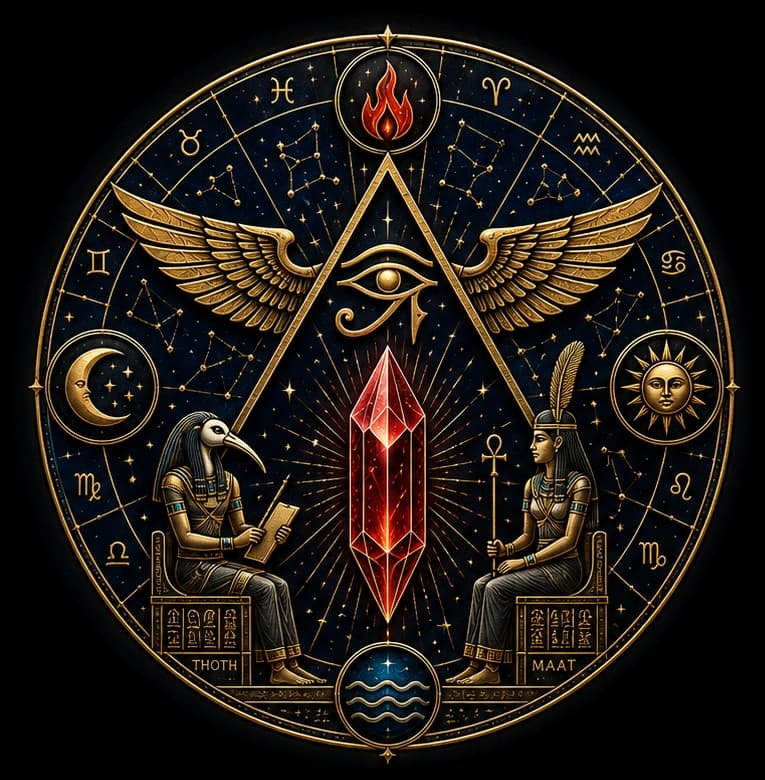
Hermetic Arts is not associated with Satanism, devil worship, anti-religious practice, harmful ritual, or the worship of any being. The Arcana, Tarot, Astrology, Alchemy, and related symbolic traditions are presented here as historical, reflective, educational, and ethical systems of symbolism.
Challenging tarot symbols such as Death or The Devil are interpreted psychologically and symbolically, not as literal evil, worship, or harmful practice. The platform does not support coercion, curses, stalking, harassment, harmful requests, or non-consensual targeting.
Read the Prohibited Practices PolicyStart here
Use the Arcana Library as a free educational map: discipline pages explain the traditions, reference sections define symbols and correspondences, and the free Tarot and Natal Chart tools are available without making private study public.
Library update
The Arcana Library is available now as a free beginner reference and will stay focused on public, reviewed, launch-safe material.
Current sections use short educational summaries, related links, and clear boundaries instead of paid gates or unfinished promises.
Free library principles
Beginner-friendly reference material available to every visitor.
The public library stays visible, crawlable, and easy to read while reviewed material grows.
Short summaries are written for symbolic study, not guaranteed results.
The library avoids medical, legal, financial, psychological, or spiritual guarantees.
Public notes avoid secret teachings, ritual instructions, and dangerous practices.
Alchemy and related subjects are framed historically and symbolically, without laboratory instructions.
Public beginner pages and reference anchors available now.
A reflective single-card tarot space for symbolic insight and personal contemplation.
Open library
Signs, houses, planetary meanings and aspects for symbolic study.
Beginner sky basics for the Sun, Moon, planets, seasons, constellations and lunar phases.
Historical themes, symbolic transformation, and alchemical images without procedures.
A compact public glossary of symbolic images and visual meanings.
Number symbolism, simple patterns, and reflective number language.
Symbolic images and recurring themes for careful reflection.
Sky, seasonal, elemental, and nature imagery for public study.
Lunar cycle language and phase prompts presented as reflection, not effects.
Solar year, seasons, solstices, equinoxes, and seasonal themes.
Fire, Water, Air, and Earth as symbolic qualities across traditions.
Animal, plant, weather, and landscape imagery read safely in context.
Shapes, colours, symbols, and energy-language references.
Shape symbolism, geometric patterns, and reflective visual traditions.
Colour meanings, visual associations, and design-focused reflection.
Chakra colours and energy language as symbolic references only.
Commonly discussed Hermetic principles as historical and symbolic context.
Public guidance for careful use of symbolic references and services.
Open reference
Free Arcana Library is a beginner-friendly reference for symbolic traditions such as tarot, astrology, moon phases, alchemy, numerology, archetypes, and sacred symbols. It is educational, reflective, and open to all visitors.
This library is for education and personal reflection only. It does not provide medical, legal, financial, psychological, or spiritual guarantees.
The Free Arcana Library is a beginner-friendly public reference for symbolic traditions, visual language, and reflective study. It is educational only and does not provide medical, legal, financial, psychological, or spiritual guarantees.
Topic group
Reflective tools and symbolic image systems.
Topic group
Basic sky language, lunar phases, and seasonal markers.
Topic group
Images, shapes, colours, and visual reference language.
Topic group
Historical, symbolic, and philosophical reference material.
Topic group
Symbolic qualities used across art, tarot, alchemy, and reflection.
Topic group
Public guidance for using symbolic services responsibly.
Free category
Start here for the basic shape of tarot as a symbolic card language for reflection.
Tarot entries are reflective prompts, not guaranteed predictions.
Free beginner reference
A simple introduction to tarot as a reflective card system and symbolic language.
Tarot is a deck-based symbolic tradition often used for reflection, storytelling, and self-inquiry.
A traditional tarot deck has 78 cards: 22 Major Arcana cards and 56 Minor Arcana cards.
The Major Arcana describe broad archetypal themes such as choice, change, learning, courage, and integration.
The Minor Arcana bring symbolic attention to everyday experiences, actions, emotions, thoughts, and material life.
Wands, Cups, Swords, and Pentacles each offer a different lens for reflection.
Some readers use reversed cards to suggest blocked, inward, delayed, or intensified expressions of a card.
On Hermetic Arts, tarot is reflective language rather than a guaranteed prediction.
Free beginner reference
Very short beginner notes for the 22 Major Arcana cards.
Beginnings, openness, trust, and the first step into an unknown path.
Focus, skill, intention, and the ability to work with what is available.
Inner knowing, quiet attention, mystery, and patient observation.
Care, creativity, growth, beauty, and the nurturing side of life.
Structure, responsibility, boundaries, and steady leadership.
Tradition, learning, shared values, and guidance from established paths.
Choice, relationship, alignment, and acting from sincere values.
Direction, discipline, movement, and gathering energy toward a goal.
Courage, patience, compassion, and gentle mastery of strong feelings.
Solitude, study, reflection, and the search for inner clarity.
Cycles, timing, change, and the turning nature of circumstances.
Fairness, truth, accountability, and careful consideration of consequences.
Pause, surrender, new perspective, and seeing from another angle.
Transition, endings, change, and the clearing that allows something new to form.
Balance, moderation, blending, and finding a workable middle path.
Attachment, temptation, limitation, and shadow patterns that ask for awareness.
Disruption, revelation, release, and the breaking of unstable structures.
Hope, renewal, openness, and a calmer sense of direction after difficulty.
Uncertainty, dreams, intuition, and the need to move carefully through ambiguity.
Clarity, vitality, warmth, confidence, and simple joy.
Reflection, awakening, review, and responding to a call for growth.
Completion, integration, wholeness, and the closing of a meaningful cycle.
Free beginner reference
The four suits give everyday tarot cards their symbolic atmosphere.
Energy, action, creativity, motivation, and the spark that begins movement.
Emotion, intuition, relationships, memory, and the inner life of feeling.
Thought, communication, challenge, decisions, and the sharpness of the mind.
Material life, work, resources, care for the body, and practical stability.
Free category
These notes introduce astrology as symbolic chart language rather than a fixed description of a person or future.
Astrology entries do not provide medical, legal, financial, or deterministic advice.
Free beginner reference
A plain-language overview of astrology as a symbolic tradition, not a deterministic system.
Astrology studies the sky as a symbolic map for reflection on character, timing, and experience.
A birth chart places planets, signs, houses, and angles into a symbolic snapshot of a moment.
Zodiac signs describe styles of expression, temperament, and symbolic atmosphere.
Planets are read as symbolic functions such as identity, emotion, thought, affection, drive, and structure.
Houses organize chart symbolism into areas of life, such as home, work, relationship, and study.
Aspects describe angular relationships between planets and how their symbols may interact.
Astrology on Hermetic Arts is offered for reflection and study, not as medical, legal, financial, or fixed predictive advice.
Free beginner reference
Basic public keywords for the twelve signs, with element and modality.
initiative, courage, directness
steadiness, patience, embodiment
curiosity, language, movement
care, memory, protection
warmth, expression, confidence
craft, service, refinement
balance, relationship, fairness
depth, privacy, transformation
search, meaning, exploration
structure, effort, responsibility
perspective, community, originality
imagination, sensitivity, compassion
Free beginner reference
Simple symbolic roles often used in beginner astrology.
identity, vitality, purpose, and conscious expression
emotion, instinct, memory, and inner needs
thought, speech, learning, and exchange
affection, beauty, values, and attraction
drive, action, courage, and conflict style
growth, meaning, generosity, and perspective
structure, limits, discipline, and maturity
change, originality, disruption, and awakening
imagination, longing, dreams, and uncertainty
depth, power, renewal, and long processes of change
Free beginner reference
A short beginner list of the twelve astrological houses.
self-presentation, body language, and how a person meets the world.
resources, values, possessions, and personal stability.
communication, learning, siblings, neighbors, and daily movement.
home, roots, private life, family patterns, and belonging.
creativity, play, romance, children, and personal expression.
routine, work habits, service, skills, and care for daily life.
partnership, contracts, one-to-one relationships, and cooperation.
shared resources, trust, vulnerability, endings, and transformation.
study, travel, philosophy, belief, and broadening perspective.
public role, vocation, responsibility, reputation, and long-term aims.
friends, networks, groups, hopes, and shared futures.
rest, retreat, dreams, solitude, hidden patterns, and release.
Free beginner reference
Four symbolic elements used across tarot, astrology, and many reflective systems.
energy, will, inspiration, courage, and the impulse to act.
feeling, memory, intuition, connection, and emotional flow.
thought, language, perspective, movement, and exchange.
form, patience, practicality, stability, and material care.
Free category
Moon phases are grouped as simple timing images for observation, journaling, and symbolic reflection.
Moon phase notes do not claim guaranteed physical, emotional, or spiritual effects.
Free beginner reference
Moon phases as gentle reflection prompts rather than guaranteed effects.
a quiet prompt for beginning, listening, and setting simple intentions.
a prompt for small first steps and patient encouragement.
a prompt for choice, effort, and meeting early resistance.
a prompt for refinement, adjustment, and continued practice.
a prompt for visibility, gratitude, completion, and emotional clarity.
a prompt for sharing, learning, and integrating what has been seen.
a prompt for release, review, and changing what no longer fits.
a prompt for rest, closure, quiet repair, and preparation.
Free category
Seasonal cycles are presented as basic solar-year reference language for education and symbolic reflection.
This section does not provide a live calendar, scheduling tools, predictions, rituals, or guaranteed effects.
Free beginner reference
A free beginner reference for the solar year, seasons, solstices, equinoxes, and symbolic seasonal reflection.
Seasonal cycles are presented here as educational and symbolic references. They can be used for reflection, but they do not guarantee outcomes or replace professional advice.
A solar year is the time Earth takes to complete one orbit around the Sun.
This is basic sky language, not a live calendar calculation.
What helps you notice the larger shape of a year?
Seasons relate to Earth's yearly orbit and the tilt of Earth's axis, which changes daylight length and solar angle.
What changes when attention shifts from a single day to a full cycle?
Seasons vary by hemisphere. When one hemisphere is in summer, the other is in winter.
Local climate and culture can shape how a season is experienced.
How might place and climate change the meaning of a seasonal image?
Solstices and equinoxes are basic seasonal sky markers connected to daylight length and the apparent path of the Sun.
What changes when a season is marked by light rather than a fixed mood?
Seasonal symbols can support reflection, but they do not predict events, force outcomes, or prove spiritual influence.
How can a seasonal image support reflection without becoming a rule?
This page explains seasonal language. It does not calculate dates, send reminders, create events, or schedule anything.
What is useful to learn as language before relying on a date tool?
Spring is often used as a symbol of emergence, fresh growth, renewed attention, and early movement.
In many places, spring is associated with longer light and visible growth, though local climates vary.
What is beginning carefully rather than fully formed?
Summer can symbolise fullness, visibility, warmth, activity, and the height of a cycle.
Summer is often linked with long days, but heat, rain, and local seasonal patterns differ widely.
What is ready to be seen, shared, or tended in brighter light?
Autumn may symbolise harvest, review, change, preparation, and the gradual release of one phase.
Autumn imagery often includes cooling, gathering, or falling leaves, but not every region shows the same signs.
What can be gathered, thanked, simplified, or released?
Winter is often used as a symbol of rest, quiet, endurance, storage, and hidden preparation.
Winter can mean cold, rain, dry season, snow, or other local conditions depending on place.
What needs protection, patience, or quiet before the next movement?
A spring equinox occurs near the time when day and night are roughly equal, marking a seasonal turn toward spring in that hemisphere.
Symbolically, it is often used as an image of balance, emergence, and new growth.
Where might balance make room for a beginning?
A summer solstice marks the longest daylight period of the year for a hemisphere.
Symbolically, it can suggest fullness, visibility, gratitude, or the peak of a cycle.
What is fully visible, and what needs careful stewardship?
An autumn equinox occurs near the time when day and night are roughly equal, marking a seasonal turn toward autumn in that hemisphere.
Symbolically, it is often read as review, harvest, adjustment, or preparation.
What deserves review before the next quieter season?
A winter solstice marks the shortest daylight period of the year for a hemisphere.
Symbolically, it can suggest stillness, endurance, and the gradual return of light.
What small light or steady practice is worth protecting?
These entries are included as brief cultural and historical context only. They are not required observances and do not include ritual, offering, or spellwork instructions.
Imbolc is discussed in some traditions as an early-year seasonal marker between winter and spring.
This entry is cultural and historical context only, not a required observance or instruction.
What is quietly preparing before it becomes visible?
Beltane is discussed in some traditions as a seasonal marker between spring and summer.
This entry does not include rituals, offerings, spellwork, or religious instruction.
What is gaining warmth, connection, or visible life?
Lughnasadh, also known as Lammas, is discussed in some traditions as a harvest-season marker between summer and autumn.
This is included as respectful seasonal context, not as a required practice.
What effort or skill is ready to be acknowledged?
Samhain is discussed in some traditions as a seasonal marker between autumn and winter.
This entry is historical and cultural context only, without ritual or spiritual instruction.
What is asking for remembrance, closure, or a quieter pace?
Beginning can symbolise the first visible step, a fresh question, or a new cycle taking shape.
What can begin simply?
Growth may suggest development, tending, learning, and gradual increase.
What needs steady care rather than speed?
Harvest can symbolise gathering results, naming what has matured, and noticing what effort produced.
What can be gathered or acknowledged now?
Release may suggest simplifying, letting a phase close, or making space for a different pattern.
What no longer needs to be carried in the same way?
Rest can symbolise pause, quiet, storage, protection, and recovery of attention.
What deserves quiet rather than more effort?
Renewal may suggest returning energy, changed perspective, or a cycle beginning again differently.
What can return in a more considered form?
Light and dark can be used as simple images of visibility, rest, contrast, and changing attention.
What is visible now, and what still needs privacy?
Balance can symbolise proportion, adjustment, and the relationship between different needs.
What needs a more workable proportion?
Transition describes the in-between quality of moving from one season, role, or rhythm into another.
What helps the change feel honest and unforced?
Return can symbolise recurrence, remembrance, and seeing a familiar cycle with new understanding.
What is returning, and what is different this time?
Solar rhythm includes day, year, seasons, solstices, equinoxes, and the changing pattern of daylight.
Lunar rhythm includes the month, Moon phases, and the visible cycle of changing Moon light.
Astronomy gives basic sky language for observation, daylight, cycles, and apparent motion.
Astrology may use seasonal and sky language symbolically, but this page does not provide charts, forecasts, or predictions.
Future calendar features may organize dates later, but this page does not create scheduling tools, reminders, events, bookings, or dashboards.
Free category
Alchemy is presented as a historical and symbolic tradition, with transformation treated as metaphor.
No laboratory, chemical, ingesting, or practical transmutation instructions are included.
Free beginner reference
Alchemy is presented here as a historical and symbolic tradition of transformation.
Alchemy appears in many cultures as a blend of early natural philosophy, symbolism, craft, and spiritual metaphor.
Modern symbolic alchemy often reads refinement, separation, union, and renewal as images for inner change.
a symbol of clarity, vitality, gold, and visible illumination.
a symbol of reflection, receptivity, silver, and changing cycles.
a symbol of movement, exchange, mediation, and changeability.
a symbol of fire, drive, spirit, and active principle in many symbolic systems.
a symbol of form, body, preservation, and grounded substance.
Hermetic Arts does not provide laboratory, chemical, ingesting, or material-processing instructions.
Free beginner reference
A beginner reference for Hermetic principles, symbolic themes, and historical context.
This reference presents Hermetic ideas as historical, symbolic, and philosophical material for education and reflection. It does not present secret doctrine, religious authority, scientific proof, or guaranteed outcomes.
Hermeticism is a broad historical and philosophical current connected with symbolic writing, late antique thought, Renaissance study, alchemy, astrology, and reflection on nature and mind.
Hermes Trismegistus is a symbolic and legendary figure in the tradition, often treated as a teacher image rather than a single confirmed historical author.
Hermetic writing often overlaps with alchemy, astrology, philosophy, and visual symbols, using comparison and metaphor as tools for study.
Interpretations vary across history, translations, communities, and readers. This guide offers simple public context, not a final authority.
These are commonly discussed principles in modern Hermetic writing. They are presented as symbolic study themes, not universal scientific laws.
Mentalism is commonly discussed as the idea that interpretation, attention, and awareness shape how experience is understood.
Presented here as a reflective theme in modern Hermetic writing, not as a scientific explanation of reality.
How might your interpretation of a situation be shaping the way it feels?
Correspondence is the habit of noticing patterns or echoes between different levels of experience, image, and symbol.
This is symbolic comparison, not proof that two things are literally the same.
What pattern seems to repeat across the small details and the larger picture?
Vibration is often used as symbolic language for movement, change, rhythm, and shifting states.
This guide treats the term as metaphorical and historical language, not a physical or medical claim.
What is changing in tone, pace, or emphasis around this question?
Polarity describes paired qualities, such as active and receptive or inner and outer, as connected parts of a larger spectrum.
Polarity is used here as a flexible reflective idea, not a fixed rule about people or identity.
What two qualities in this situation might be held together instead of treated as enemies?
Rhythm points to cycles, returns, pauses, and changes of pace in life and symbolic study.
Rhythm is offered as a way to observe patterns, not as a guarantee of what will happen next.
What repeating pattern or timing cue is worth noticing gently?
Cause and Effect invites attention to relationship, consequence, conditions, and responsibility.
This is not presented as blame, fate, or legal advice. It is a reflective way to notice connections.
What choice or condition seems to be influencing the current pattern?
Gender is discussed in some historical texts as symbolic polarity or creative principle, such as active and receptive qualities.
Hermetic Arts treats this as historical symbolic language only. It is not a claim about biology, identity, roles, or personal nature.
What creative or receptive quality might be present without turning it into a rule about people?
This phrase is often used to describe symbolic reflection between larger patterns and smaller details.
It is used here as a poetic study phrase, not as a scientific law.
How does the larger pattern show up in the small, ordinary details?
Inner and outer reflection considers how private experience and visible circumstance may inform one another.
This is a reflective frame, not a psychological assessment.
What inner response and outer situation might be speaking to each other?
Balance can describe a thoughtful relationship between qualities such as action and rest, clarity and feeling, or structure and openness.
Balance is not presented as a diagnosis or universal rule.
What quality might need a little more room or a little less emphasis?
Transformation is a metaphor for change, refinement, learning, and the gradual reshaping of understanding.
This is symbolic language and does not promise guaranteed spiritual results.
What is changing slowly enough that it may need patience?
Correspondence is the study of symbolic relationships across images, traditions, and ideas.
No one tradition is presented here as owning every symbol completely.
What symbol or image seems to connect several ideas without reducing them to one answer?
Microcosm and macrocosm describe the small world and the larger world as possible mirrors for reflection.
The pairing is used as symbolic language, not as a guaranteed map of reality.
Where does a small detail seem to echo a broader concern?
The path of study frames learning as patient attention, comparison, humility, and revision over time.
This is not a hidden order, rite, or credential path on Hermetic Arts.
What is one small question that would make this topic easier to understand?
The mirror is a common image for reflection, self-observation, and seeing a familiar subject from another angle.
Mirror language is metaphorical and does not imply certainty about a person.
What does this topic reflect back that may be useful to notice?
Teacher and student can be read as symbolic roles for guidance, curiosity, practice, and humility.
These are study roles, not claims of special authority or secret access.
Where might curiosity be more useful than certainty?
Tarot uses symbolic archetypes and card images for reflective reading.
Astrology uses symbolic timing, signs, planets, houses, and chart language.
Alchemy uses transformation symbolism and historical images of refinement.
The four elements describe symbolic categories such as action, feeling, thought, and form.
The symbols glossary explains shared visual language across the library.
This section gives a simple philosophical and historical frame for those symbolic systems.
Free category
Numerology is included as a plain symbolic reference for reflection on number patterns.
Number meanings are prompts for thought, not fixed predictions about fate.
Free beginner reference
A simple symbolic reference for numbers as reflective keywords.
beginning, independence, focus, and initiative.
relationship, balance, listening, and cooperation.
expression, creativity, play, and communication.
structure, steadiness, order, and practical work.
change, movement, freedom, and adaptation.
care, responsibility, harmony, and support.
study, reflection, privacy, and inner search.
capacity, discipline, responsibility, and material management.
completion, compassion, perspective, and release.
11, 22, and 33 are sometimes treated as intensified numbers, but here they remain symbolic prompts only.
A life path number is a reflective numerology exercise, not a fixed prediction of character or fate.
Free category
The symbols glossary offers compact, non-dogmatic meanings for familiar images.
Symbol meanings are offered as cultural and reflective associations, not universal rules.
Free beginner reference
Short beginner meanings for common symbolic images.
clarity, warmth, vitality, visibility, and conscious purpose.
reflection, change, dreams, memory, and emotional cycles.
guidance, hope, distance, orientation, and quiet renewal.
attention, awareness, perception, and watchfulness.
renewal, instinct, transformation, caution, and life force.
growth, emergence, beauty, and unfolding through difficulty.
roots, growth, connection, lineage, and stability.
access, understanding, choice, and a way through a threshold.
receptivity, feeling, care, and the vessel of experience.
will, direction, creativity, and the spark of action.
discernment, thought, truth, and the need for clear speech.
the material world, protection, work, resources, and grounded care.
wholeness, cycles, unity, return, and containment.
relation, movement, direction, and three-part structure.
stability, foundation, form, and practical order.
Free category
Colour symbolism is presented as visual language for art, tarot, alchemy, symbols, design, and reflective study.
Colour notes do not claim healing, protection, frequency, manifestation, therapy, or guaranteed effects.
Free beginner reference
A free beginner reference for colour symbolism, visual meaning, and reflective design language.
Colour symbolism is presented here as an educational and reflective visual reference. This library does not claim that colours heal, diagnose, protect, cleanse, attract outcomes, or produce guaranteed effects.
Colours can shape mood, emphasis, contrast, and symbolic atmosphere in art, tarot imagery, branding, and reflective visual traditions.
Colour meanings vary by culture, tradition, artwork, setting, and personal experience. This guide gives simple public associations only.
Colour symbolism can support art appreciation, personal reflection, and visual design without becoming a claim about health, fate, or guaranteed results.
Hermetic Arts does not present colours as medical treatment, diagnosis, spiritual proof, protection, or a way to force outcomes.
White can symbolise clarity, simplicity, openness, or a clean visual field.
Where does the image create space, pause, or a sense of beginning?
Black is often associated with depth, mystery, boundary, shadow, or visual weight.
What is being framed, hidden, deepened, or given visual weight?
Red can symbolise attention, action, warmth, vitality, urgency, or visible intensity.
What is asking to be noticed first?
Orange may suggest warmth, creativity, movement, sociability, or playful emphasis.
Where does the image invite movement, warmth, or creative response?
Yellow is often associated with brightness, learning, visibility, joy, or alert attention.
What is being illuminated or made easier to see?
Green can symbolise growth, care, nature, relationship, or a balanced visual middle ground.
What seems to be growing, connecting, or asking for care?
Blue may suggest calm, distance, communication, sincerity, sky, water, or spaciousness.
Where does the image create distance, quiet, or a clearer tone of speech?
Indigo is often associated with night, reflection, imagination, depth, or subtle perception.
What becomes visible when the image is read slowly?
Violet can symbolise contemplation, mystery, dignity, imagination, or threshold states.
What question is being held open rather than answered too quickly?
Pink may suggest tenderness, affection, softness, play, or gentle visual warmth.
Where does the image soften, invite care, or reduce severity?
Gold is often associated with value, radiance, sunlight, honour, refinement, or emphasis.
What is being marked as central, precious, or highly visible?
Silver can symbolise reflection, moonlight, subtle value, coolness, or quiet brightness.
What is being reflected rather than directly stated?
Brown may suggest earthiness, age, craft, wood, soil, warmth, or practical materiality.
What feels practical, old, handmade, or materially grounded?
Grey can symbolise neutrality, ambiguity, restraint, weather, age, or a softened boundary.
Where does the image avoid a simple yes or no?
Turquoise often suggests freshness, water, sky, communication, craft, or vivid clarity.
Where does the image feel open, clear, or visually refreshing?
Purple may suggest richness, imagination, ceremony, depth, or a blend of warm and cool qualities.
What feels layered, imaginative, or intentionally set apart?
Reds, oranges, and yellows often feel visually active, close, bright, or attention-drawing in an image.
Blues, greens, indigos, and violets often feel visually spacious, quiet, distant, or contemplative.
White, black, grey, brown, and beige can create structure, rest, contrast, texture, or visual grounding.
Gold and silver often mark value, light, reflection, emphasis, or ceremonial detail in symbolic artwork.
Contrast helps guide attention, create depth, and show what is central, hidden, emerging, or receding.
Opposite colour pairs can create tension, energy, balance, or visual emphasis when used side by side.
Tarot imagery uses colour to shape mood, emphasis, atmosphere, and the first impression of a card.
Some astrological and planetary references use colour associations symbolically, without making predictions.
Alchemy uses colours such as black, white, red, gold, and silver as symbolic visual language.
Chakra references often include colour associations as traditional or modern symbolic language only.
Crystals and minerals are often recognised through colour, texture, shine, and visual appearance.
Symbols and geometric forms can use colour to create contrast, emphasis, rhythm, and design meaning.
Artwork and print-on-demand items may use colour symbolically, but this reference does not make product claims.
A colour is best read in context. The same colour can feel sacred, artistic, cultural, personal, decorative, or symbolic depending on where it appears.
No healing claims.
No colour therapy.
No medical advice or diagnosis.
No protection guarantees.
No manifestation promises.
No frequency claims.
No psychological assessment.
No financial or legal advice.
No ritual instructions.
No secret initiation material.
Free category
Animal and nature symbolism is presented as visual and story language in tarot, dreams, myths, art, and reflective traditions.
Nature notes are not fixed omens, predictions, guaranteed messages, spirit-animal assignments, or wildlife interaction guidance.
Free beginner reference
A free beginner reference for animal, plant, weather, and nature symbolism in art, tarot, dreams, and reflective traditions.
Animal and nature symbols are presented here as educational and reflective references. They are not fixed omens, predictions, guarantees, or instructions to interact with wildlife.
Animals, plants, weather, and landscapes often appear as symbolic images in art, tarot, dreams, myths, stories, and reflective traditions.
Meanings vary by culture, story, artwork, place, personal experience, and the full image around the symbol.
This library does not treat nature images as certain predictions, warnings, messages, or proof of what will happen.
Wildlife and natural places should be respected. Do not disturb, capture, feed, harm, or seek signs from living animals or habitats.
A lion can symbolise courage, dignity, strength, visibility, or protective presence in art and story.
Where might courage need steadiness rather than force?
An eagle is often associated with height, perspective, vision, distance, and broad awareness.
What changes when the scene is viewed from farther away?
An owl may suggest watchfulness, night awareness, quiet study, or careful observation.
What can be noticed by slowing down and watching carefully?
A raven can symbolise intelligence, mystery, memory, shadow, or a messenger figure in stories.
What hidden detail or remembered pattern might matter here?
A dove is often associated with peace, gentleness, release, hope, or reconciliation.
Where might gentleness be a useful response?
A swan may suggest grace, transition, beauty, reflection, or quiet emotional depth.
What looks calm on the surface but carries deeper movement?
A wolf can symbolise instinct, loyalty, wildness, group belonging, or alert independence.
Where is the balance between independence and belonging?
A fox is often associated with cleverness, adaptability, subtlety, and moving carefully through complexity.
Where might a lighter, more adaptable approach help?
A deer may suggest sensitivity, gentleness, alertness, grace, or quiet movement.
What asks for careful attention rather than pressure?
A horse can symbolise movement, vitality, service, freedom, or directed momentum.
What direction is the movement taking?
A dog is often associated with loyalty, companionship, alertness, guidance, or familiar trust.
What form of support is steady and familiar?
A cat may suggest independence, curiosity, grace, privacy, or quiet observation.
Where is independence or privacy part of the picture?
A serpent can symbolise renewal, caution, instinct, transformation, or a winding path.
What is changing shape or asking for careful respect?
This is symbolic language only and not guidance for handling living creatures.
A dragon may suggest power, treasure, challenge, guardianship, imagination, or forces larger than ordinary life.
What feels powerful enough to require wisdom and restraint?
A butterfly is often associated with change, lightness, emergence, beauty, or delicate transition.
What is becoming visible after a quiet period of change?
A bee can symbolise cooperation, diligence, sweetness, craft, or the value of shared work.
What small work contributes to a larger pattern?
Respect insects and their habitats; this is not interaction guidance.
A spider may suggest weaving, patience, pattern, craft, or the careful making of connections.
What pattern is being made one strand at a time?
A fish can symbolise water, feeling, movement beneath the surface, abundance, or hidden life.
What is moving below the visible surface?
A frog may suggest transition, water and land, voice, renewal, or adaptation between environments.
What is changing from one environment or stage to another?
A stag can symbolise dignity, wild beauty, leadership, renewal, or a figure glimpsed at the forest edge.
What appears briefly and asks to be followed with care?
A bull is often associated with strength, steadiness, fertility as a symbol, persistence, and material force.
Where is patience or steady strength more useful than speed?
A ram may suggest initiative, impact, courage, assertion, or the beginning of movement.
Where is direct action helpful, and where might it need patience?
A bear can symbolise strength, rest, protection as a story theme, solitude, or seasonal withdrawal.
What needs strength with rest rather than constant movement?
A tree can symbolise roots, growth, connection, age, shelter, or a link between earth and sky.
What supports growth below the visible surface?
An oak is often associated with endurance, age, strength, shelter, and rooted presence.
What needs time, patience, and a strong root system?
A willow may suggest flexibility, sorrow, water, memory, or the ability to bend without breaking.
Where might flexibility be stronger than resistance?
A rose can symbolise beauty, affection, complexity, secrecy, or the meeting of softness and thorn.
What holds both beauty and boundary?
A lotus is often used to suggest emergence, unfolding, beauty, and growth from difficult conditions.
What is opening gradually and in its own time?
Ivy may suggest attachment, persistence, memory, covering, or a bond that continues over time.
What is clinging, growing, or covering something older?
A thorn can symbolise boundary, protection as imagery, pain, warning, or the cost of beauty.
Where does a boundary need respect?
A seed can symbolise potential, beginning, patience, hidden growth, or something not yet visible.
What small beginning needs time before it can be seen?
A flower may suggest beauty, opening, impermanence, delicacy, or a moment of display.
What is ready to be seen, even briefly?
Fruit can symbolise harvest, result, sweetness, nourishment as imagery, or the outcome of growth.
What result has grown from earlier care?
A root is often associated with origin, support, hidden structure, ancestry, or practical grounding.
What unseen support keeps the visible part standing?
A branch can symbolise extension, choice, connection, shelter, or a path dividing into directions.
What new direction is growing from the same root?
A leaf may suggest season, growth, change, small life, or the detail that reveals a larger pattern.
What small detail shows the season of the larger story?
A garden can symbolise cultivation, care, beauty, enclosure, or a space shaped by attention.
What grows when attention is regular and careful?
A forest may suggest mystery, depth, the unknown, shelter, or a journey away from ordinary paths.
What feels hidden, layered, or not yet mapped?
A mountain can symbolise challenge, perspective, endurance, distance, or a high goal.
What requires patience and a wider view?
A river may suggest movement, passage, change, boundary, or the flow of time.
What is moving, whether or not it can be stopped?
The sea can symbolise vastness, emotion, mystery, depth, or forces beyond easy control.
What feels larger than the immediate shore?
A lake may suggest reflection, stillness, containment, memory, or a calm surface.
What is mirrored on the surface, and what remains below?
A cave can symbolise shelter, retreat, hidden knowledge, inward movement, or a threshold underground.
What asks for quiet attention away from public view?
A desert may suggest simplicity, exposure, endurance, solitude, or a stripped-back landscape.
What remains when distractions are removed?
A storm can symbolise intensity, conflict, release, disruption, or a charged atmosphere.
What tension is visible in the atmosphere?
Rain is often associated with softening, renewal as imagery, sorrow, relief, or the return of moisture.
What is being softened, washed over, or quietly changed?
Wind may suggest movement, unseen influence, communication, change, or a shift in atmosphere.
What is moving through the scene even if it cannot be seen directly?
Lightning can symbolise sudden insight, disruption, intensity, division, or a bright interruption.
What arrives suddenly and changes the view?
Dawn may suggest beginning, visibility, hope, return of light, or a gentle transition.
What is becoming visible for the first time?
Dusk can symbolise closing, transition, rest, ambiguity, or the softening of clear edges.
What is ending gently rather than abruptly?
Night may suggest mystery, rest, uncertainty, dreaming, hiddenness, or quiet attention.
What can be approached without demanding full daylight?
A path can symbolise direction, choice, progress, habit, or the next visible step.
What is the next visible step, even if the whole road is unclear?
A crossroads may suggest choice, meeting, uncertainty, turning point, or several possible directions.
What choice is being framed by the meeting of paths?
Tarot often uses animals and landscapes as symbolic images that support a card mood or story.
Dreams may include animal and nature imagery, but meanings depend on personal and situational context.
Archetypal figures can appear through animal forms, forests, mountains, thresholds, and natural scenes.
Seasonal references use nature images as reflective markers for change, rest, growth, and return.
The Symbols Glossary gives broader visual meanings that can overlap with nature imagery.
A nature symbol is best read in context. The same image can feel wild, protective, gentle, threatening, playful, sacred, or decorative depending on where it appears.
No omens as certainty.
No prophecy.
No guaranteed messages.
No spirit-animal assignment.
No animal-use instructions.
No wildlife interaction guidance.
No healing claims.
No ritual or spellwork instructions.
No medical, legal, or financial advice.
No secret initiation material.
Free category
Sacred geometry and shape symbolism are presented as visual reference language in art, tarot, alchemy, architecture, and reflective traditions.
Shape notes do not claim healing, frequency, protection, manifestation, or guaranteed effects.
Free beginner reference
A free beginner reference for common shapes, patterns, and visual symbols used in art, tarot, alchemy, architecture, and reflective traditions.
Sacred geometry and shape symbolism are presented here as educational and reflective visual references. This library does not claim that shapes, patterns, or proportions produce guaranteed spiritual, physical, energetic, medical, or practical outcomes.
Sacred geometry is a term often used for shapes and patterns that people read as meaningful, ordered, beautiful, or symbolic.
Shapes can act like visual words. A circle, square, line, or spiral may suggest a theme before any written explanation appears.
Meanings vary by culture, tradition, artwork, architecture, and use. This library gives simple public meanings only.
Hermetic Arts does not claim that geometry produces spiritual, physical, energetic, medical, emotional, or practical results.
A point can symbolise focus, origin, attention, or the smallest visible mark.
Commonly appears as a dot, centre mark, seed point, or visual starting place.
What is the simplest point of attention in this image or question?
A line is often used to suggest direction, connection, division, or movement from one point to another.
Lines can guide the eye, separate spaces, or create a path through an image.
Where does the eye travel, and what does that direction suggest?
A circle can symbolise wholeness, cycle, return, enclosure, or continuity.
Circles commonly appear in halos, wheels, seals, diagrams, and round frames.
What is being held together or brought back into view?
A triangle may be read as direction, relation, ascent, descent, or a three-part structure.
Triangles can point upward, downward, or across an image, changing the sense of movement.
What three parts seem to be in relationship?
A square can symbolise stability, foundation, order, boundary, or practical form.
Squares often appear as rooms, frames, platforms, grids, or grounded containers.
What needs structure, steadiness, or clearer edges?
A cross can symbolise meeting, orientation, intersection, balance, or a marked centre.
Cross forms may appear as intersecting paths, four directions, or a visual point of attention.
What two directions or concerns are meeting here?
A spiral is often used to suggest unfolding, return with change, growth, or inward and outward movement.
Spirals can draw the eye inward, outward, or around a repeating path.
What seems to be returning in a changed form?
A hexagon can symbolise pattern, joining, efficiency, and repeated structure.
Hexagons commonly appear in honeycomb forms, tiling, diagrams, and natural pattern imagery.
What is being joined into a wider pattern?
A star may symbolise guidance, distance, radiance, orientation, or a point of hope.
Stars can appear as points, rays, celestial marks, or decorative signs of direction.
What offers orientation without forcing the path?
A crescent is often used to suggest change, partial light, receptivity, or a lunar image.
Crescents appear in lunar symbols, night imagery, curved vessels, and transitional designs.
What is partly visible, still forming, or changing phase?
The vesica piscis can symbolise overlap, meeting, shared space, or a form made by two circles.
It appears as an almond-shaped centre where two circles overlap.
This shape appears in many visual traditions, including architecture, diagrams, and religious art.
What is created where two circles of meaning overlap?
A mandala may be read as an arranged whole, often built around a centre and repeated forms.
Mandalas often use circles, symmetry, repeated shapes, and a strong central point.
The word has specific cultural and religious uses; this entry only notes simple visual structure.
How do the parts relate to the centre?
A labyrinth can symbolise a winding path, patient movement, or a journey toward and away from a centre.
Unlike a simple straight path, a labyrinth uses curves and turns to slow the eye.
What might need patient movement rather than a direct line?
A grid is often used to suggest order, mapping, structure, comparison, or measured space.
Grids divide a surface into repeatable spaces and can support diagrams or artwork.
What becomes clearer when the image is organised into parts?
An axis can symbolise orientation, alignment, a central line, or a relationship between directions.
An axis may be vertical, horizontal, diagonal, visible, or implied by the composition.
What line seems to organise the image?
A centre can symbolise focus, gathering, stillness, or the point around which other parts are arranged.
The centre may be marked by a point, figure, circle, empty space, or repeated pattern.
What is the image asking you to notice first?
Repetition can suggest rhythm, emphasis, memory, habit, or a pattern becoming visible.
Repeated shapes can make a surface feel ordered, musical, dense, or ceremonial.
What repeats, and what does the repetition draw attention toward?
Symmetry is often used to suggest balance, mirroring, formality, or visual calm.
Symmetry can be exact, approximate, vertical, horizontal, radial, or implied.
Where does the image feel balanced, and where does it deliberately shift?
A radial pattern may be read as movement from or toward a centre.
Radial designs often use spokes, rays, petals, or repeated forms around one point.
What seems to radiate outward or gather inward?
A mirror pattern can suggest reflection, duality, comparison, or paired meaning.
Mirror patterns place similar forms on opposite sides of a line or centre.
What is being compared, reflected, or held in relation?
Nested shapes are often used to suggest layers, containment, depth, or one meaning held inside another.
Nested forms may repeat the same shape at different sizes or place one figure within another.
What larger context holds the smaller detail?
Interlocking circles can symbolise overlap, relationship, shared space, and repeated connection.
This pattern can create petals, lenses, chains, or linked fields of space.
Where do separate areas meet without becoming identical?
A path pattern may suggest movement, sequence, process, or a way through complexity.
Paths may be straight, winding, circular, branching, or broken.
What route does the image invite the eye to follow?
Spiral growth can suggest gradual expansion, return, and development through repeated movement.
This visual idea appears in shells, plants, diagrams, and decorative forms.
What is developing gradually rather than all at once?
A fourfold pattern is often used to suggest directions, seasons, elements, or a stable arrangement.
Fourfold designs may use a cross, square, quartered circle, or four repeated parts.
What four areas or directions are being organised?
A sevenfold pattern may be read as a visual grouping of seven parts, steps, or repeated points.
Sevenfold designs can appear as seven marks, rings, petals, stages, or symbolic groupings.
This entry treats sevenfold patterns as visual grouping only, not secret doctrine.
What changes when the image is read as a sequence of parts?
The symbols glossary explains common images. Shape symbolism can support those images without fixing a single meaning.
The elements describe symbolic categories. Geometry can arrange those categories into circles, squares, crosses, or diagrams.
Alchemy uses shapes and marks as visual language for historical and symbolic ideas, not as practical instructions.
Tarot cards often use geometry in composition, framing, directions, and symbolic imagery.
Astronomy uses real sky cycles and observation; geometry may appear in diagrams, maps, and visual explanations.
Symbolic patterns may appear visually in artwork or products, but this reference is not a shop, product claim, or buying guide.
No healing claims or medical effects.
No energetic guarantees or frequency claims.
No protection claims or manifestation promises.
No ritual, spellwork, or activation instructions.
No secret initiation material or hidden doctrine.
No medical, legal, financial, psychological, or professional advice.
No replacement for professional care or safety support.
Free category
The four elements appear across tarot, astrology, and many reflective systems as simple symbolic qualities.
Element notes are symbolic only and do not make health or material claims.
Free beginner reference
A beginner reference for Fire, Water, Air, and Earth as symbolic ideas in tarot, astrology, alchemy, and reflective traditions.
The four elements are presented here as educational and symbolic references. They do not guarantee outcomes, diagnose conditions, or replace medical, legal, financial, psychological, or professional advice.
Fire can symbolise energy, action, courage, inspiration, and the spark that begins movement.
Where might a clear, focused action help without rushing the whole process?
Fire is used here as a metaphor for attention and movement, not as a practical instruction.
Water can symbolise emotion, intuition, memory, connection, and the ability to move with changing conditions.
What feeling or relationship needs patient listening before a decision is made?
Water language is symbolic and reflective, not a claim about health, mood, or outcome.
Air can symbolise thought, language, perspective, clarity, and the space needed to understand a situation.
What would become clearer if the situation were described from another point of view?
Air is offered as symbolic language for reflection, not as a fixed rule about personality.
Earth can symbolise form, patience, resources, practical care, and the grounded details of everyday life.
What practical step would make this reflection easier to carry into daily life?
Earth is a reflective symbol for grounding and form, not a guarantee of material results.
The elements can be used as metaphors for noticing where a situation may need a different kind of attention. This is reflective language, not an assessment.
A symbolic category used to group qualities such as action, feeling, thought, and form.
A symbolic link between ideas, images, or traditions, such as Wands being linked with Fire.
A reflective metaphor for noticing where one quality may need support from another.
A non-literal connection used for study, comparison, or personal reflection.
A simple way to describe paired qualities, such as active and receptive, without treating them as fixed rules.
A historical term sometimes used for patterns of style or mood; here it is not used as a personality diagnosis.
Free category
Chakra and energy concepts are presented as symbolic and cultural reference language for reflection.
These notes do not diagnose, treat, cure, unblock, cleanse, or guarantee outcomes.
Free beginner reference
A free beginner reference for chakra symbolism, colour associations, and reflective energy concepts.
Chakra and energy concepts are presented here as symbolic and reflective references. This library does not diagnose, treat, cure, unblock, cleanse, or guarantee physical, emotional, psychological, or spiritual outcomes.
Chakras are commonly discussed as symbolic centres in some spiritual and yogic traditions, with meanings that vary by lineage, culture, and modern interpretation.
Subtle energy is presented here as reflective and spiritual language, not as a medical measurement or professional assessment.
Colours, symbols, and body-area references are included as traditional or modern symbolic associations only.
This guide offers beginner context for study and reflection. It is not medical advice, spiritual authority, or instruction in body practices.
The Root chakra is commonly associated with steadiness, belonging, and basic orientation in daily life.
What helps you feel steady enough to make one practical choice?
This is symbolic language, not a claim about the body or health.
The Sacral chakra is commonly associated with feeling, creativity, relationship, and the ability to respond to change.
Where might flexibility or creative attention be useful?
This entry does not describe causes, symptoms, or treatment.
The Solar Plexus chakra is commonly associated with confidence, choice, responsibility, and personal direction.
What decision would support a clearer sense of direction?
The Heart chakra is commonly associated with care, connection, compassion, and the meeting point between inner and outer life.
What form of care feels honest, balanced, and respectful?
The Throat chakra is commonly associated with expression, listening, truthfulness, and thoughtful communication.
What needs to be named simply and carefully?
The Third Eye chakra is commonly associated with insight, imagination, perspective, and inner observation.
What changes when you look at the situation from a wider angle?
The Crown chakra is commonly associated with meaning, contemplation, humility, and connection to larger questions.
What question invites patience rather than certainty?
This is a symbolic reflection entry, not a promise of spiritual result.
These colours are presented as symbolic associations only. They are not described as producing physical, emotional, or psychological effects.
Red is often used symbolically for foundation, vitality, attention, and immediate presence.
What needs simple, practical attention?
Orange is often used symbolically for creativity, warmth, responsiveness, and movement.
Where could creative flexibility help?
Yellow is often used symbolically for clarity, confidence, learning, and choice.
What would make the next choice clearer?
Green is often used symbolically for care, relationship, growth, and balance.
What kind of care is needed without overextending?
Blue is often used symbolically for communication, listening, calm expression, and sincerity.
What can be said with both honesty and care?
Indigo is often used symbolically for perspective, imagination, reflection, and pattern recognition.
What pattern becomes visible from a quieter viewpoint?
Violet or white is often used symbolically for contemplation, meaning, spaciousness, and humility.
What can remain open without needing a final answer?
In this library, energy means symbolic or spiritual language people may use for mood, attention, atmosphere, or felt quality.
What word best describes the atmosphere of the question?
Balance is used as a reflective metaphor for proportion, care, and relationship between qualities.
What quality might need more room or less pressure?
Grounding is used here as symbolic language for steadiness, simplicity, and practical orientation.
What practical detail can help you stay oriented?
Flow is a metaphor for responsiveness, movement, and the way attention can move through a subject.
Where does the situation seem flexible, and where does it seem fixed?
A centre is a symbolic point of focus, not a medical structure or diagnostic marker.
What is the central question underneath the surface issue?
Aura is included as a symbolic or spiritual idea for the impression, atmosphere, or boundary around a person or space.
What kind of boundary or atmosphere feels respectful?
Alignment is used as symbolic reflection on whether values, words, and actions feel coherent.
Where do words and actions feel most consistent?
Blockage is a metaphor some people use for feeling stuck or unclear. It is not used here as a diagnosis.
What gentle question might make a stuck place easier to understand?
Subtle body is traditional or spiritual language for non-physical maps of experience in some traditions.
What symbolic map helps you describe the experience without claiming certainty?
This free library is an educational reference, not a service page or booking flow.
Free category
Archetypes are presented as recurring symbolic patterns in stories, tarot, art, dreams, myths, and reflective traditions.
Archetypes are not diagnoses, fixed identities, personality profiles, or predictions.
Free beginner reference
A free beginner reference for symbolic figures and recurring themes in tarot, stories, art, myths, dreams, and reflective traditions.
Archetypes are presented here as symbolic and reflective patterns. They are not diagnoses, fixed identities, predictions, or psychological assessments.
An archetype is a recurring symbolic figure or pattern that appears across stories, images, myths, tarot, and reflection.
The same figure can carry different meanings depending on culture, tradition, artwork, question, and personal context.
This section does not label anyone as an archetype. The entries are prompts for noticing themes, not categories for people.
Use these notes as plain symbolic language for study, journaling, art, or tarot reflection, not as prediction or authority.
The Seeker can represent curiosity, movement, and the desire to understand what lies beyond the familiar.
Often appears in journeys, quests, first steps, study paths, and cards about movement or inquiry.
What question is asking for honest attention?
The Guide may symbolise orientation, support, and the presence of a helpful map or witness.
Common in mentor figures, lantern images, signposts, and cards that suggest counsel or direction.
What kind of guidance would be useful without giving away your own discernment?
The Teacher can represent shared learning, tradition, explanation, and the careful passing on of knowledge.
Often appears through books, schools, elders, instruction scenes, and cards about learning.
What lesson is being offered, and how can it be received thoughtfully?
The Student may symbolise humility, practice, attention, and the willingness to begin again.
Appears in apprentices, notebooks, early steps, repeated practice, and beginner imagery.
Where would curiosity help more than certainty?
The Healer is used here only as a symbolic role for care, support, restoration, and tending what has been neglected.
Can appear in images of tending, mending, shelter, water, gardens, or compassionate presence.
What might need gentler care or steadier support?
This is symbolic language, not a medical, mental-health, or treatment claim.
The Messenger can represent communication, news, exchange, and the movement of meaning from one place to another.
Often appears through letters, birds, roads, heralds, voices, and cards about communication.
What needs to be said, received, or translated more clearly?
The Guardian may symbolise protection, thresholds, boundaries, and the care taken before entry.
Common in gates, doors, sentinels, protective figures, and images of watchful attention.
What boundary would make this situation more respectful or clear?
The Creator can represent making, shaping, imagining, and bringing something into form.
Often appears through tools, studios, hands, seeds, and cards about creative action.
What wants to be shaped with patience and care?
The Artist may symbolise expression, beauty, pattern, and the courage to make inner material visible.
Appears in images of music, painting, craft, performance, and symbolic design.
What form could express something that plain explanation cannot?
The Sage can represent perspective, thoughtful judgment, memory, and the patience to see a wider pattern.
Common in elders, books, mountain views, lamps, and cards about mature understanding.
What wider view might soften or clarify the question?
The Hermit may symbolise solitude, study, inward listening, and the search for quiet clarity.
Often appears in lanterns, caves, night paths, retreats, and tarot images of inward search.
What can be understood better in quiet?
The Ruler can represent structure, responsibility, stewardship, and the need to hold order carefully.
Appears in crowns, thrones, laws, councils, and cards about leadership or boundaries.
Where is responsible structure helpful, and where might it need humility?
The Rebel may symbolise challenge, change, refusal, and the courage to question an inherited pattern.
Common in broken chains, crossroads, outsiders, and stories about necessary disruption.
What pattern is asking to be questioned without becoming reckless?
The Trickster can represent mischief, reversal, surprise, and the way assumptions can be unsettled.
Often appears through masks, riddles, comic turns, shapeshifters, and unexpected lessons.
What assumption might need a lighter or more flexible view?
The Shadow is used here as a symbolic image for hidden patterns, avoided truths, or material not yet examined.
Appears in darkness, mirrors, doubles, caves, and cards that ask for careful awareness.
What might need honest attention without fear or self-judgment?
This is a symbolic prompt, not a diagnosis or mental-health category.
The Child may symbolise beginnings, wonder, vulnerability, play, and openness to experience.
Common in sunrise imagery, first steps, gardens, animals, and stories of discovery.
Where could wonder or simplicity make the situation less heavy?
The Mother can represent nurture, protection, generativity, shelter, and the sustaining side of care.
Appears in gardens, vessels, homes, protective figures, and images of growth.
What needs to be supported so it can grow in a steady way?
The Father may symbolise structure, guidance, protection, responsibility, and accountable presence.
Often appears in pillars, houses, tools, rules, mentors, and images of steady support.
What kind of structure would support care rather than control?
The Lover can represent value, attraction, devotion, choice, and the pull toward meaningful connection.
Appears in union images, paired figures, flowers, mirrors, and cards about alignment.
What does sincere connection ask for here?
The Warrior may symbolise courage, discipline, protection, and the focused use of energy.
Common in shields, roads, armor, trials, and cards about effort or defense.
Where is courage needed, and how can it remain respectful?
The Judge can represent discernment, fairness, accountability, and the need to weigh evidence carefully.
Appears in scales, courts, contracts, mirrors, and cards about responsibility.
What would a fair and careful view include?
The Fool can represent beginning, openness, trust, and the delicate first step into unfamiliar ground.
Known through tarot, journey stories, thresholds, roads, and images of first movement.
What first step feels honest without needing the whole path solved?
The Magician may symbolise focus, skill, intention, and the thoughtful use of available tools.
Appears in tarot, craft imagery, tables, hands, tools, and scenes of deliberate action.
What is already available that could be used with more intention?
A movement through stages, questions, learning, and changing perspective.
Where are you on the path rather than at the final answer?
A symbolic doorway between what is known and what is not yet entered.
What needs to be noticed before crossing into the next step?
A moment of alignment, discernment, and responsibility between possible directions.
Which choice best reflects the values you want to act from?
A symbolic change of shape, meaning, role, or understanding over time.
What is changing, and what deserves patience during that change?
The linked themes of ending, grief, clearing, and the possibility of new form.
What has ended, and what may need space before something new is named?
A reflective image for proportion, relationship, and adjusting what has become uneven.
What needs more room, and what may need less force?
A symbolic pull toward what is attractive but may ask for clearer awareness.
What is appealing here, and what should be considered carefully?
A theme of experience, perspective, humility, and thoughtful response.
What would a wiser pace or wider view suggest?
The willingness to meet difficulty with honesty, steadiness, and care.
What would courage look like without becoming harsh?
A theme of timing, restraint, attention, and allowing a process to unfold.
What may need time rather than pressure?
The symbolic line that helps define care, respect, privacy, and responsibility.
What boundary would make the situation clearer or kinder?
A theme of ownership, consequence, stewardship, and careful action.
What is yours to tend, and what is not yours to control?
A theme of honesty, clarity, evidence, and the courage to see more plainly.
What can be named clearly without exaggeration?
A symbolic mist around assumption, projection, wish, or incomplete information.
What might be uncertain, imagined, or not yet fully known?
A theme of bringing separate lessons, feelings, or insights into a more workable whole.
What pieces of the experience need to be held together gently?
The movement back with new understanding, changed perspective, or completed work.
What has changed since the beginning of the path?
Major Arcana cards often use archetypal images, while Minor Arcana cards can show everyday themes. A card meaning depends on context, spread, and question. Tarot is reflective, not a fixed prediction.
Symbols can support archetypal themes, but the same symbol can mean different things in different contexts. This library avoids absolute interpretations.
No psychological diagnosis or personality profiling.
No prediction, fate claim, or fixed identity label.
No therapy, mental-health advice, or assessment.
No spiritual authority claim or secret initiation material.
No ritual, spellwork, or harmful-practice instructions.
Free category
Dream images are presented as personal and symbolic material that can be explored gently without fixed meanings.
Dream notes are not diagnoses, predictions, warnings, therapy, or universal dictionary definitions.
Free beginner reference
A free beginner reference for dream imagery, recurring symbolic themes, and reflective interpretation.
Dream symbols are presented here as reflective and educational references. They are not fixed meanings, diagnoses, predictions, warnings, or psychological assessments.
Dreams can feel symbolic, emotional, strange, vivid, or completely ordinary. This reference keeps interpretation gentle and open-ended.
Dream images can vary by person, culture, memory, mood, recent experience, and the larger dream context.
A dream image can invite reflection, but it should not be treated as a fixed truth, warning, prophecy, or external message.
This library does not ask for, store, interpret, or analyze personal dream content.
A house can suggest shelter, memory, privacy, identity, or different rooms of experience.
What part of life or memory does the setting seem to hold?
A door may symbolise access, boundary, invitation, hesitation, or a transition point.
What feels open, closed, or waiting to be approached?
A key can suggest permission, understanding, access, or the possibility of opening something.
What might be asking for a clearer way in?
A road is often used in stories as a symbol of direction, journey, distance, or movement.
Where does the path seem to lead, and how does it feel to travel it?
A bridge can suggest connection, crossing, risk, support, or movement between two places.
What two sides or situations might be asking for connection?
Water may symbolise feeling, memory, depth, flow, or changing inner weather.
What is the water doing, and what mood does it create?
The sea can suggest vastness, unknown depth, movement, distance, or a larger emotional field.
What feels larger than one clear explanation?
A river may symbolise passage, continuity, movement, boundary, or change over time.
What seems to be moving, carrying, or dividing the scene?
Fire can suggest intensity, transformation, warmth, danger, attention, or release in symbolic imagery.
Is the fire warming, illuminating, consuming, or asking for care?
A forest may symbolise complexity, mystery, growth, concealment, or a path through the unknown.
What is easy to see, and what is hidden by the trees?
A mountain can suggest effort, perspective, distance, challenge, or a wider view.
What changes when the image is viewed from higher ground?
A cave may symbolise retreat, interior space, hidden material, quiet, or shelter.
What does the enclosed space invite you to notice carefully?
A mirror can suggest reflection, image, perspective, recognition, or uncertainty about appearances.
What is being reflected, and what might still be unclear?
A book may symbolise learning, memory, record, story, or information waiting to be read.
What kind of story or knowledge seems present?
A lantern can suggest guidance, limited light, careful movement, or seeing one step at a time.
What small amount of light is enough for the next step?
An animal may symbolise instinct, companionship, alertness, wildness, or a quality noticed in the scene.
How does the animal behave, and what quality does it bring to the dream?
A bird can suggest perspective, message, movement, distance, or a view from above.
What changes when the image is seen from above or from a distance?
A serpent may symbolise change, alertness, renewal, caution, or a powerful image that asks for context.
What is the serpent doing, and how does the dream frame it?
A star can suggest distance, guidance, hope, orientation, or a small point of light.
What offers orientation without demanding certainty?
The Moon may symbolise reflection, change, night vision, rhythm, or something partly hidden.
What is visible only in indirect or changing light?
The Sun can suggest visibility, warmth, clarity, daylight, or something brought into view.
What becomes clearer when the scene is brought into light?
A storm may symbolise intensity, disruption, release, pressure, or changing conditions.
What is shifting in the atmosphere of the dream?
A garden can suggest growth, tending, beauty, cultivation, or a space shaped by care.
What is being tended, neglected, or allowed to grow?
A tower may symbolise height, isolation, overview, structure, or distance from the ground.
What does the height reveal, and what might it separate?
Falling can suggest loss of footing, transition, surrender, uncertainty, or a sudden shift in control.
What changes when the dream loses solid ground?
Flying may symbolise freedom, distance, perspective, escape, or movement beyond ordinary limits.
What becomes visible from a freer or wider view?
Searching can suggest inquiry, longing, memory, unfinished attention, or the sense that something matters.
What is being looked for, and how does the search feel?
Being late may suggest timing, pressure, expectation, missed rhythm, or concern about readiness.
What expectation or timing concern appears in the scene?
Meeting a stranger can suggest unfamiliar perspective, unknown material, encounter, or a new role in the story.
What quality does the stranger bring into the dream?
Returning to an old place may symbolise memory, review, unfinished context, or seeing the past from a new angle.
What feels familiar, and what feels different this time?
A journey can suggest movement through stages, questions, distance, or changing understanding.
Where does the dream seem to begin, turn, and end?
A threshold may symbolise an edge, crossing, pause, or movement into unfamiliar territory.
What is being approached but not yet fully entered?
Choice can suggest direction, values, hesitation, or the presence of more than one possible path.
What options does the dream place near each other?
Change may appear through shifting places, altered bodies, new roles, or changing weather.
What changes shape, and what remains recognisable?
Loss and return can suggest absence, recovery, searching, memory, or a renewed encounter.
What leaves, and what comes back changed?
A hidden room may symbolise overlooked space, private memory, discovery, or a part of the setting not yet explored.
What does the newly found space make possible?
An unfinished task can suggest interruption, pressure, open loops, or something still asking for attention.
What remains incomplete, and how does that incompletion feel?
Speaking or silence may symbolise expression, withheld words, listening, or difficulty being understood.
What is spoken, unsaid, or hard to hear?
Light and darkness can suggest visibility, privacy, uncertainty, clarity, or changing attention.
What can be seen, and what remains in shadow?
Being seen may suggest exposure, recognition, vulnerability, attention, or the wish to be understood.
How does it feel to be noticed in the dream?
Transformation can suggest changing form, role, setting, relationship, or meaning inside the dream.
What transforms, and what does the change make visible?
Finding something may suggest recognition, recovery, surprise, or attention returning to a detail.
What is found, and why might it matter in the dream story?
Losing something can suggest uncertainty, release, distraction, change, or a shift in value.
What is missing, and how does the dream respond to the absence?
Tarot and dreams both use symbolic imagery, but a dream image is not automatically the same as a tarot card meaning. Context matters more than certainty.
Archetypes can help describe repeated story patterns, but they should not become fixed labels for a person or a dream.
The Symbols Glossary can offer visual starting points. Dream symbols should not be treated as universal dictionary definitions.
No diagnosis, therapy, mental-health assessment, or personal profiling.
No prophecy, warning system, guaranteed interpretation, or fixed meaning dictionary.
No dream journal, storage, submission form, account diary, or AI interpretation feature.
No spiritual authority claims or secret initiation material.
No ritual, spellwork, or harmful-practice instructions.